


What to Ask Before You Choose a Central Vacuum Installer
If you're comparing central vacuum sales and installation options for your Walterboro SC home, the questions you ask up front matter more than any brochure. A central vacuum system isn't something you return if it doesn't fit your house — the tubing goes inside the walls, so getting the plan right before installation starts is the whole game.
A plain disclosure before you read further: Jones Vacuum Center's confirmed, everyday work is Miele canister vacuum sales, vacuum repair, sheds, and air purifiers. Central vacuum sales and installation isn't confirmed in our business records as something we currently sell or install. This article is general information written as a decision checklist for anyone comparing installers — it doesn't describe a current Jones Vacuum Center service, and nothing below should be read that way.
For general background, our site includes a few other pages that use central vacuum terminology. A Hide-A-Hose central vacuum system keeps the hose retracted inside the tubing itself, so you pull out only as much as you need and it retracts back in when you're finished. Our site has a page about outdated central vacuum technology that goes into that distinction in more detail. You can see the types of equipment involved on our central vacuum systems page. We can't confirm any of these pages reflect a currently active Jones Vacuum Center service — treat them strictly as background reading on the topic, not as a statement of what we currently sell or install.
The questions themselves are useful no matter who ends up doing the work. Any legitimate installer should be able to walk you through the same handful of decisions: whether your home is a good fit for retrofit or new-construction installation, which hose system suits how you actually clean, how many inlets you need, where the power unit will live, and whether the equipment being proposed is current technology or something closer to outdated. Ask these of whichever installer you're considering before you sign anything.
Treat this like any other decision that gets built into the structure of your house. Once tubing is run and inlets are cut in, changing your mind means opening walls back up. A short conversation before the work starts is cheaper than a correction after.
Is Your Home a Retrofit or New Construction Job?
New construction is the simpler case — tubing goes in before walls are closed up, so there's more flexibility in routing and inlet placement. Retrofitting an existing home means running tubing through attics, crawl spaces, or closets to reach the inlet locations you want. It's more common, but it's still worth asking exactly how an installer plans to route the pipe through your specific house rather than a generic one.
Ask to see or hear the proposed route before work begins. A good installer should be able to explain where the tubing goes, which walls or chases it uses, and what, if any, patching or touch-up you'll need afterward.
One detail worth asking about directly: how many inlet cuts the retrofit will require, and whether any of those cuts land somewhere visible, like a finished hallway or a room you care about keeping untouched. Closets and utility spaces are usually the easiest places to stack tubing vertically between floors, which is why installers often favor them — but that only works if your closets actually line up with where you want inlets. If an installer can't answer this without walking the house first, that's a reasonable thing to ask them to do before you commit to anything.
Hide-A-Hose or a Separate Hose and Tool Caddy?
One of the bigger decisions is hose style. A conventional central vacuum uses a separate hose you carry from room to room and store somewhere when you're done. A Hide-A-Hose style system instead keeps the hose retracted inside the tubing itself, so you pull out only as much as you need and it retracts back in when you're finished — no hose to coil up and store. This is general information about how the two styles differ; it isn't a description of what Jones Vacuum Center currently sells or installs, so confirm directly with whichever installer you're considering which option they actually offer.
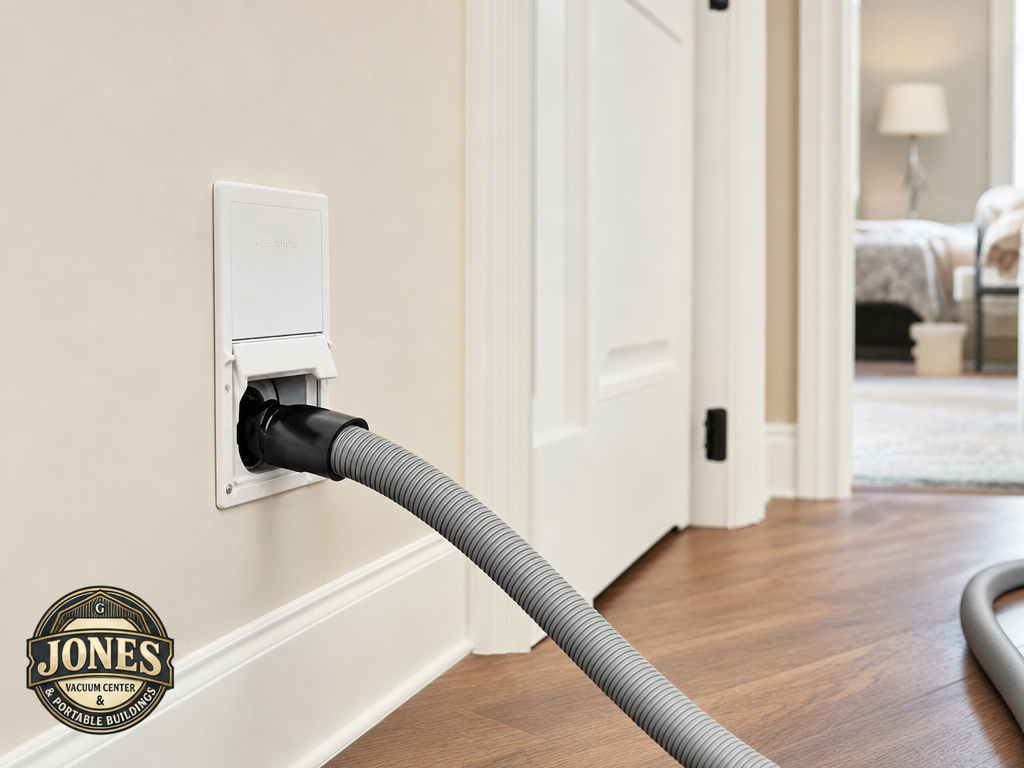
Ask whichever installer you're considering which option is being proposed and why. The right answer depends on your storage space, how many people in the house will be using it, and whether you'd rather have one hose that reaches everywhere or a hose-and-caddy system you move between rooms.
It's also fair to ask how each option handles day-to-day wear — how the hose connects and disconnects, how it retracts, and what's involved if a hose ever needs to be replaced. A system you'll use weekly for years is worth understanding mechanically, not just by which one sounds more convenient in a showroom.
How Many Inlets Does the Plan Call For?
Inlet placement determines how far you'll be dragging hose on any given cleaning day. Too few inlets and you're stretching hose across multiple rooms; too many and you've paid for coverage you didn't need. Ask the installer to walk the house with you, in person or on a floor plan, and explain the inlet count and placement before installation, not after.
A useful way to pressure-test the plan: ask which rooms each proposed inlet is meant to cover, and whether any room is a stretch for the hose length you'll be using. If the answer is vague, that's a sign the layout hasn't been worked out room by room yet — push for specifics before the tubing goes in. It's also fair to ask whether the proposed count matches how the house is actually laid out, not a standard count applied regardless of square footage or floor plan.
Where Will the Power Unit Go?
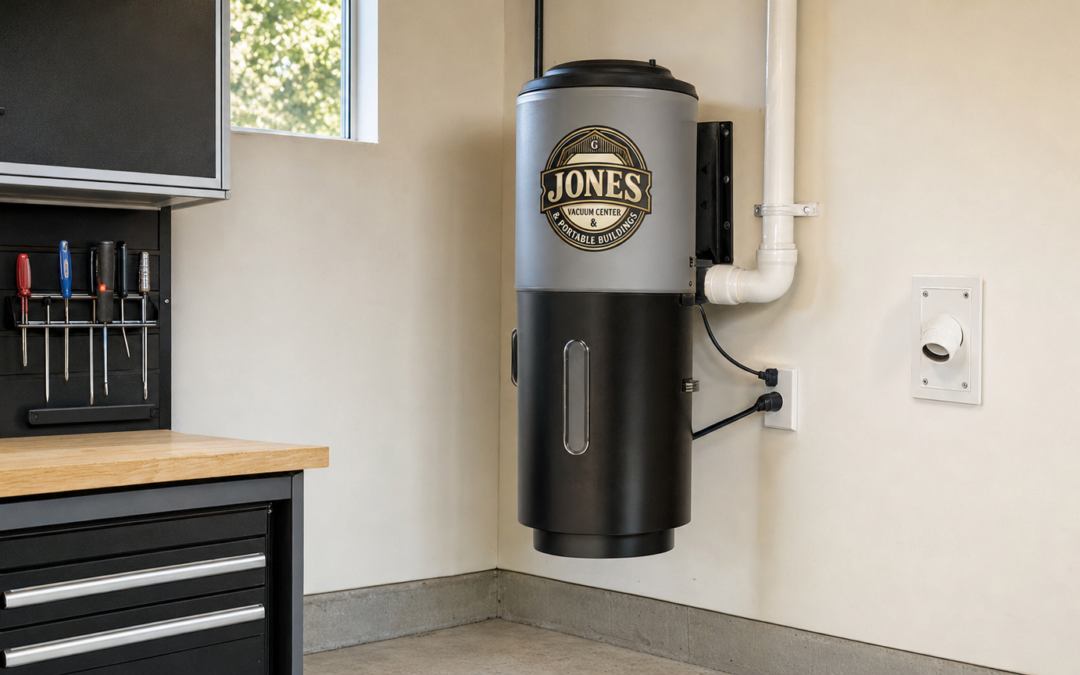
The power unit is the workhorse of the system, and where it's installed affects both noise and convenience for emptying or maintenance. Garages, basements, and utility rooms are common locations because they keep the noisiest part of the system away from living space. Ask where yours is proposed to go, how it will be vented, and how easy it will be to access when it needs emptying or servicing.
Also ask how the unit will be mounted and whether the exhaust is vented outside or into the space it's installed in. Easy access matters more than people expect — a power unit tucked behind stored boxes or wedged into a tight corner is a unit nobody wants to maintain, which means maintenance quietly stops happening. If the proposed spot is somewhere you already struggle to reach, say so before installation rather than after.
It also helps to ask how much clearance the unit needs around it for future servicing, and whether the installer plans to leave any slack in the tubing connections near the unit itself. A power unit that's awkward to reach on day one doesn't get easier to reach five years in — if anything, the opposite, once the surrounding space fills up with storage or equipment.
Is the Equipment Current Technology?
Not all central vacuum equipment on the market is current. Some systems and components being sold are built on older designs that newer models have improved on. That's general industry knowledge, not a description of Jones Vacuum Center's current offerings — central vacuum installation isn't confirmed as active work for us. It's still a fair question for whichever installer you do end up talking to: is this current equipment, and what's changed from the older generation?
It's also reasonable to ask about the filtration approach — whether the system uses disposable bags, a washable filter, or a cyclonic separator, and what that means for how often you'll need to service it. The answer should be specific to the unit being proposed, not a general statement about central vacuums as a category.
Worth asking too: how long the manufacturer has made that specific model line, and whether parts and accessories are still readily available for it. A system built around a discontinued or hard-to-source component is a harder system to keep running years down the line, even if it works fine on install day.
Questions About the Installation Itself
Beyond equipment and layout, ask the practical questions: who will actually be doing the installation, what the house will look like during the work, and what cleanup or patching is included once the tubing is run. If you're retrofitting, ask specifically how the crew plans to minimize cuts into walls or ceilings and what happens to those spots afterward.
It's also worth asking how the crew protects floors and finished surfaces while they work, and roughly what order the work happens in — tubing first, then inlets, then the power unit, for example. Knowing the sequence helps you plan around the parts of your house that will be off-limits while work is underway.
Ask, too, how long the job is expected to take from start to finish, and whether that estimate assumes a straightforward layout or accounts for the specific routing your house needs. A vague timeline is as much a red flag as a vague inlet count — both usually mean the installer hasn't worked through your house in detail yet.
None of this is specific to one brand or company; it's the same set of logistics questions worth asking whoever ends up doing the job. A clear, specific answer to each of these is a better sign than a confident but vague one.
What Happens After Installation?
A central vacuum is a long-term fixture in the house, so it's worth understanding what support looks like once it's installed — who you call if an inlet stops working, a hose needs replacing, or the power unit needs service. Central vacuum installation and ongoing service aren't confirmed as active work for us, so if support after installation matters to you — and it should — get a clear answer from whichever installer you choose before you commit.
Ask, too, what routine upkeep the system will need going forward — things like emptying or replacing a filter, checking inlet covers, or inspecting hose connections. A system that's easy to live with day to day is one where you already know what the small, occasional maintenance looks like before you ever need it.
It's also worth asking what a typical service call involves if something does go wrong a few years in — whether it's a quick fix an installer can usually handle on one visit, or something that tends to require ordering parts first. Knowing that ahead of time sets realistic expectations instead of surprises.
Questions and answers
Can a central vacuum be added to an existing home, or only new construction?
Both are common approaches in the industry generally. Retrofitting an existing home is standard practice — it just takes more planning to route tubing through walls, attics, or crawl spaces instead of running it before the walls are closed up. Ask whichever installer you're considering to explain their specific retrofit plan for your house.
What's the difference between a Hide-A-Hose system and a regular central vacuum hose?
A Hide-A-Hose style system retracts the hose into the tubing itself when you're done, so there's nothing to carry or store separately. A conventional system uses a hose you move room to room and put away afterward. This isn't a description of a Jones Vacuum Center service — central vacuum installation isn't confirmed as active work for us. Ask whichever installer you're considering which option they actually offer.
This article is general guidance for comparing central vacuum installers — it isn't a description of a Jones Vacuum Center service. If you're looking for vacuum sales, vacuum repair, or storage sheds in Walterboro SC, reach out to Jones Vacuum Center directly to see what we currently offer.