


What Decides Whether It's Cheaper to Repair or Replace a Vacuum
Whether it's cheaper to repair or replace a vacuum comes down to three things: what the repair actually costs, how much life is likely left in the machine, and whether a comparable replacement would cost meaningfully more. There's no single answer that applies to every vacuum, because a belt replacement on a five-year-old upright is a very different decision than a motor replacement on a ten-year-old machine whose parts are getting harder to find.
Repair cost itself is usually made up of two pieces: the part and the labor to install it. A worn belt or filter is a small part and a quick job. A motor, a main circuit board, or a gearbox assembly is a larger part and a longer job, and those costs add up fast on an older machine. Knowing which category a given repair falls into is most of the battle in deciding whether it's worth doing.
There is no fixed percentage in this article that decides every repair-versus-replacement case. Compare the proposed work for your actual vacuum with a suitable replacement and consider whether each option meets your household’s needs.
It also helps to separate what you want from what you have. If the current machine does the job well except for the one fault, repair is the straightforward path. If you've been outgrowing it anyway — more square footage to cover, pet hair that needs a stronger brush roll, stairs that are awkward with the current design — that's a signal replacement might serve you better even if the repair itself is affordable.
Repairs That Are Almost Always Worth Doing
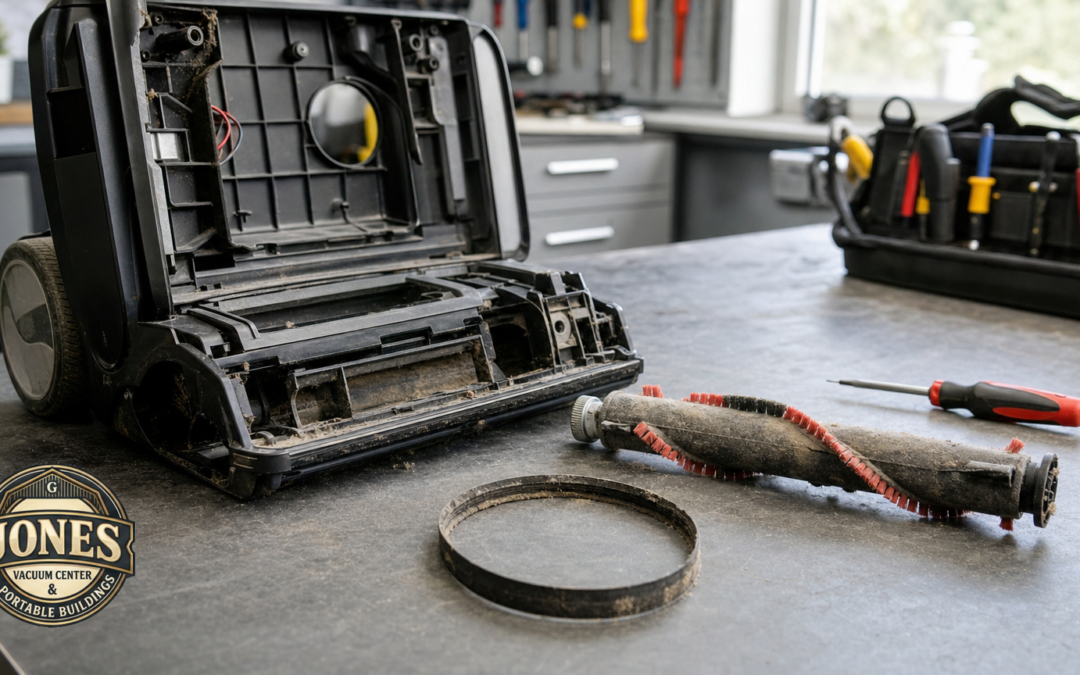
Some vacuum problems are inexpensive to fix and don't say anything about the overall health of the machine. A clogged hose, a worn belt, a full or torn bag, a tangled brush roll, a clogged or saturated filter, or a frayed power cord are all routine wear items on almost any vacuum, regardless of brand or age. These repairs are usually quick and low-cost, and fixing them restores the vacuum to full working order without touching anything structural.
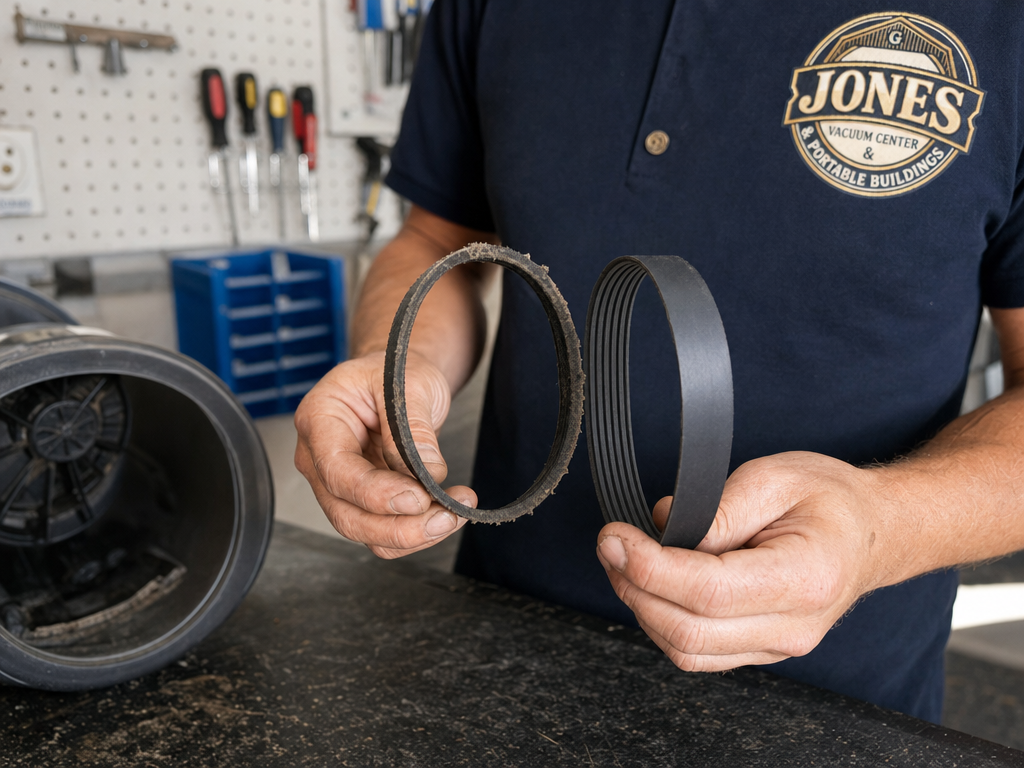
Loss of suction is one of the most common complaints, and it's often caused by one of these simple issues rather than a failing motor. A blocked airway or a clogged filter can make a perfectly healthy vacuum feel weak, which is why it's worth having it looked at before assuming the worst. What feels like 'the vacuum is dying' is frequently something that can be cleared or swapped out in a single visit, at a fraction of the cost of replacement.
When Replacement Starts to Make More Sense
The calculation shifts once the repair involves the motor, the main circuit board, or a part that's no longer made for that model. Motor replacements and board repairs tend to be the most expensive line items on a vacuum, and on an older machine that cost can approach or exceed what a new unit would run. At that point you're spending serious money to extend the life of a machine that may have other parts wearing out close behind.
Parts availability matters just as much as price. Some models — especially discontinued lines or older generations of a brand — become harder to source parts for over time. If parts can't be found at all, or only an aftermarket substitute is available, that's a practical reason to replace rather than repair, independent of cost. If you're looking at new options, another reason to buy a new vacuum from Jones Vacuum Center is worth a look before you decide.
Compare the repair estimate with the cost of a replacement that does the same jobs. If you use the current vacuum on thick carpet, stairs, and bare floors, include any tools or attachments you'd need to buy to match that with a new machine. The goal is to line up two real numbers — what the repair would cost and what a comparable replacement would cost — rather than guessing which one is the better deal.
Brand and Model Affect the Math
Not all vacuums age the same way, and that affects whether repair stays the cheaper option for longer. Some brands are built with more repairable, modular parts, which keeps repair costs lower even several years in. If you own a Dyson, for example, it's worth understanding specific facts about Dyson vacuums before assuming a repair isn't worth it — some issues that look serious are actually common and inexpensive to address on that brand.
When you're weighing a replacement against a repair bill, it helps to think past the sticker price. A cheaper model that wears out again in two years isn't necessarily the better deal over a slightly pricier one built with parts that hold up and stay serviceable. That total cost of ownership, not just the number on the price tag, is what actually decides whether replacing now saves money in the long run.
Getting an Honest Answer for Your Specific Vacuum
The only way to know for certain whether it's cheaper to repair or replace a vacuum you own is to have it looked at. A description of the symptom — weak suction, a burning smell, a strange noise — can narrow down likely causes, but the actual repair cost depends on what's found once the machine is opened up.
Contact Jones Vacuum Center to discuss your vacuum and ask what service options are available for its model and condition. Check any assessment process and terms before arranging a visit.
When you get the repair estimate, it's worth asking two more things: what the labor charge covers, and how long the repair is expected to take. Ask about the proposed timeline for your own case rather than assume how quickly work will be completed. Having both numbers — cost and timeline — in front of you makes the repair-versus-replace decision easier to make with confidence.
Before you bring the vacuum in, it helps to note the model number, when the problem began, and whether it happens with the floor head, the hose, or both. Mentioning any recent belt, bag, or filter change also gives whoever looks at it a clearer starting point for narrowing down the cause.
Questions and answers
How do I know if my vacuum is worth fixing?
Start with the diagnosis, the work proposed and whether the needed parts are available. Compare that proposal with a suitable replacement before deciding. A clogged hose and a failed motor are different problems, so age or a guessed part cost alone does not settle the question.
Does the age of the vacuum matter if the repair is cheap?
Consider age alongside condition, the work proposed and whether the vacuum still suits the household. A small repair does not by itself prove that every other component is sound, while age alone does not establish that replacement is necessary. Compare the actual options instead of applying a fixed percentage rule.
Contact Jones Vacuum Center to discuss options for your vacuum. Ask about the appropriate next step, scope and terms before arranging any work.