


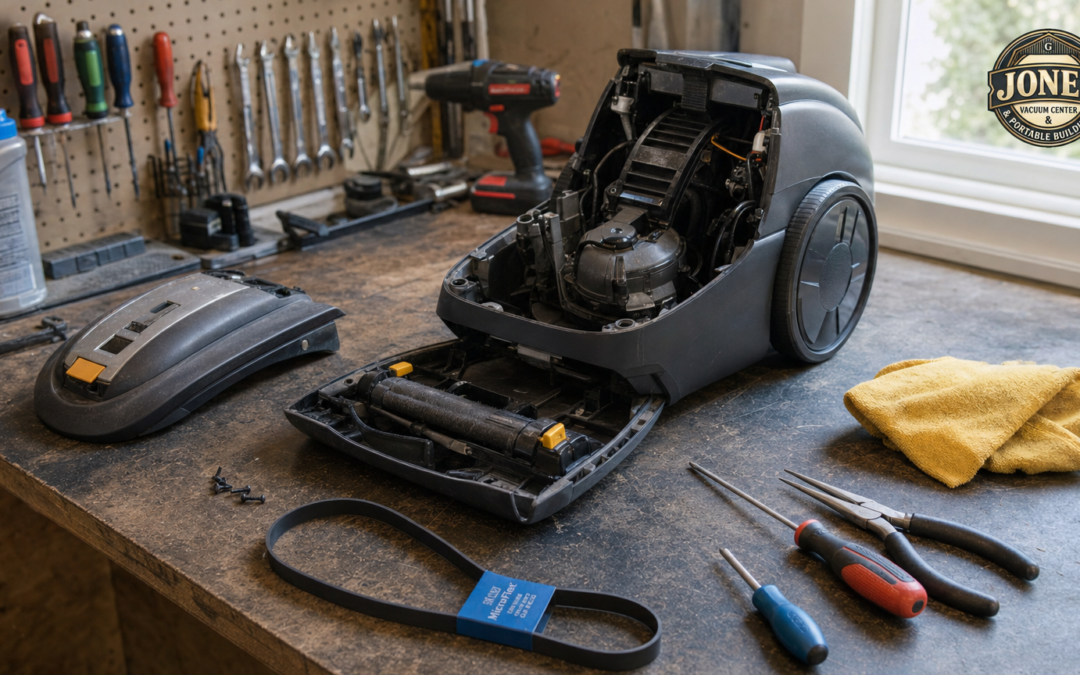
What to Ask Before You Book Vacuum Cleaner Service and Repair
Before you drop off a vacuum anywhere for vacuum cleaner service and repair, it helps to ask a few direct questions first. A clogged hose or a worn-out belt is usually a simple, inexpensive fix. A dead motor or a damaged circuit board is a different conversation entirely, and you want to know which kind of conversation you're having before you leave your machine behind.
Most people don't repair vacuums often enough to know what a fair process looks like. That's normal — you shouldn't need to become an expert in vacuum repair just to get your machine fixed. What you do need is a shop willing to answer a handful of plain questions honestly before any work starts. Jones Vacuum Center offers vacuum cleaner service and repair, and the questions below are the ones worth asking any shop, including this one, so you know what to expect before the work starts.
None of these questions are complicated, and a shop that's comfortable answering them is usually a shop that's comfortable with its own process. If a question gets you a vague answer, or no answer at all, that tells you something too.
It also helps to think about why these questions matter in the first place. A vacuum is a mechanical thing with a motor, a belt, bearings, filters, and usually some electronics. Almost every vacuum problem traces back to one of those parts wearing out, clogging, or failing outright — which means most of the questions below are really just asking a shop to show you it understands that chain of cause and effect before it starts charging you for work.
Confirm They Work on Your Vacuum Brand and Type
Not every repair shop services every brand, and not every shop handles both upright and canister models, or bagged and bagless designs. Some shops lean toward one type of machine because that's what they stock parts for; others are set up to handle a wider range. Neither approach is wrong, but it matters to know which one you're dealing with before you drive over with your vacuum in the trunk.
Ask directly whether a shop works on the brand you own and whether they can get parts for it. Parts availability is often the real question behind the brand question — a shop might be happy to look at your machine, but if the belt, filter, or motor part has to be special-ordered from the manufacturer, that changes your timeline. This is worth asking plainly rather than assuming based on what a shop sells — a store that carries a brand on its showroom floor doesn't necessarily mean it also repairs that brand, so ask about the repair side specifically.
Type matters just as much as brand. A bagless upright with a cyclonic filter system has different wear points than an older bagged canister model — the filters clog differently, the motors sit in different places, and the parts aren't interchangeable between the two designs. If you own something less common, like a backpack vacuum or a shop-style wet/dry unit, it's worth asking about that specifically rather than assuming a shop that handles household uprights automatically handles every type.
If you're still shopping and comparing vacuum brands before you buy, this roundup of Dyson vacuum facts covers some details worth knowing. It's a useful read if you're trying to decide what to buy next rather than what to repair now, and the two decisions often end up tangled together once you know what a repair will cost.
Ask About Diagnosis and Repair Costs Up Front
A reasonable shop should be willing to look at the vacuum and tell you what's actually wrong with it, and to give you a sense of what the fix will cost, before committing you to anything. It's worth asking directly how a shop handles that first step — whether they diagnose before they repair, whether there's any charge for that diagnosis, and how you'll find out the cost once they know what's wrong. Shops vary in how they handle this, so ask rather than assume, and get the answer before you authorize any work.
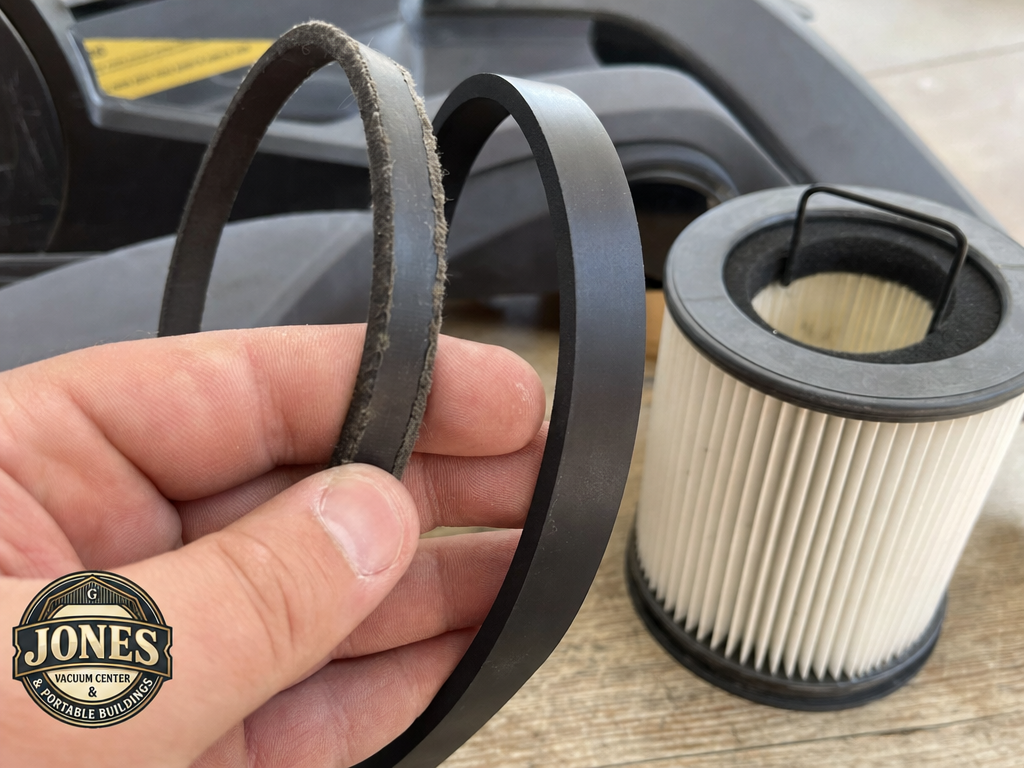
Knowing what's wrong matters because vacuum problems aren't always what they seem from the outside. Weak suction might be a clogged filter you could have cleaned yourself, or it might be a failing motor that costs far more to fix. A burning smell might mean a jammed brush roll, or it might mean the motor has already been damaged by running too hot for too long. A vacuum that cuts off and on might simply have a loose cord connection, or it might point to a worn switch that needs replacing. The only way to know which you're dealing with is to have someone actually open it up and look, which is exactly why a proper diagnosis matters more than the price of any single part.
If the estimate comes back higher than you expected, that's the moment to ask whether the repair is worth it compared to a replacement — a separate question, and one worth thinking through carefully rather than deciding on the spot. Age of the machine, how heavily it's used, and whether parts are still readily available for it all factor into that decision, and a shop that repairs and sells vacuums should be able to walk you through each of those factors honestly.
It's also reasonable to ask whether the quote you're given is firm or whether it could change once the technician gets further into the machine. Sometimes a second issue only becomes visible once the first one is addressed — a belt replacement might reveal a bearing that's also worn, for instance. A shop that's upfront about that possibility, and that calls you before doing any additional work beyond the original quote, is one that's treating the estimate as a real commitment rather than a starting offer.
Ask How Long the Repair Will Take
Turnaround time varies by what's wrong and what parts are needed. A belt or filter swap might be done the same day, since those are the kinds of parts a shop is more likely to keep on hand. A part that has to be ordered — a specific motor component, a brand-specific circuit board, a less common hose assembly — could take longer, and the wait is usually on the part arriving rather than on the actual repair work once it does.
Ask upfront how long a shop expects the repair to take so you're not left guessing, especially if the vacuum you're dropping off is the only one you have at home. If timing matters to you — say, you've got houseguests coming or a pet that sheds — say so when you drop it off. A shop that knows your situation can at least tell you honestly whether that timeline is realistic, even if they can't promise an exact date before they've opened the machine up.
It also helps to ask how you'll be told the machine is ready — a phone call, a text, or just a general pickup window — so you're not left wondering whether to call and check in yourself.
And it's reasonable to ask what happens if a part takes longer than expected to arrive. Supply timing on a specific motor or circuit board isn't something a repair shop controls, so a shop that gives you a realistic range rather than a firm promise on an uncommon part is usually being honest with you, not evasive. Asking how they'll keep you updated if the timeline slips is a fair follow-up question.
Ask What Happens If the Vacuum Isn't Worth Fixing
Sometimes a shop looks at a machine and the honest answer is that repairing it costs more than it's worth, especially on an older or lower-cost model. This isn't always obvious from the outside — a vacuum can look fine and still have a motor that's on its way out, or parts that are simply no longer made for that model. A good repair shop will tell you that plainly instead of charging you to fix something you'd be better off replacing.
Ask how a shop handles that conversation, and whether they'll walk you through newer options if the old vacuum isn't a good candidate for repair. A shop that sells vacuums as well as repairing them is in a reasonable position to have that conversation with you directly, rather than sending you somewhere else to figure out what to buy next. It's a fair question to ask before you drop the machine off, not after you get the bad news.
It's also fair to ask whether they'll return the old machine to you if you decide not to proceed, or whether there's a fee just for the look — getting that answer upfront avoids any surprise later.
A few things are worth weighing when you do reach that decision point. How old is the machine, and how heavily has it been used? Is the part that failed a common, inexpensive one, or something specific to that model that's getting harder to source? Has this same vacuum needed repair before, or is this the first real problem it's had? None of these questions have a single right answer, but walking through them with someone who repairs vacuums for a living is a lot more useful than guessing on your own.
If It's a Central Vacuum System, the Questions Are Different
Central vacuum systems are built into the house, so a repair question for one of those usually turns into a conversation about the inlet valves, the tubing, and the power unit rather than a single portable machine. Diagnosing a central system often means checking the whole line — where it's drawing poor suction, whether a valve is sealing properly, whether the power unit itself is the issue — before anyone can say what the fix actually involves. If that's what you're dealing with, the questions to ask are different enough that they deserve their own look — this isn't the article to answer them in.
Questions and answers
Should I ask about a diagnosis fee before I agree to repair?
Yes. Ask whether there's a charge just to look at and diagnose the vacuum, separate from the cost of the actual repair, before you authorize any work. Shops handle this differently, so get the answer upfront rather than assuming.
Should I bother repairing an older vacuum?
It depends on the machine and the problem. Ask the shop what's wrong before you decide — some older vacuums are easy and cheap to fix, others aren't worth the cost of the repair.
What are the most common problems people bring a vacuum in for?
In general, the usual culprits are a clogged hose or filter reducing suction, a worn or snapped belt stopping the brush roll from turning, a motor that's overheated or burned out, and a clogged brush roll tangled with hair or thread. Which one you're dealing with is exactly the kind of thing a proper diagnosis should identify before any repair is quoted.
How often should a vacuum be serviced?
There's no single number that fits every vacuum — it depends on how often it's used, what kind of flooring and household it's cleaning, and how well filters and belts have been maintained in between. Rather than guessing at a schedule, it's more useful to ask a shop to check the filter, belt, and brush roll condition whenever something feels off — weaker suction, a change in sound, or a smell — instead of waiting for a full breakdown.
If you have a vacuum that needs looking at, contact Jones Vacuum Center and ask about diagnosis, any assessment fee, and expected turnaround before you decide.